Commissioning Fine Art Sculpture: An Artist’s Guide to Original Works
Updated: 1 minute ago
There’s a moment in the creative process that I’ve always loved: when an idea starts taking shape in my mind, but nothing about it is quite certain yet.
It might begin with an image, a film, a landscape, a memory, or even a feeling that’s hard to describe. Through sketching, experimenting, and sculpting, that initial idea slowly becomes something more tangible.
For me, art and sculpture aren’t just about making physical objects. What excites me most is the possibility of turning a story, an emotion, or an imagined world into something you can actually see and touch.
I still think of myself as someone who’s constantly learning and exploring. Maybe that’s why I enjoy the early stages of creating something so much, when almost anything is still possible.
Commissioning an original sculpture can be part of that same experience. It’s a collaboration where someone’s idea meets an artist’s imagination, and something new begins to emerge.

What Does It Mean to Commission a Fine Art Sculpture?
Commissioning a sculpture means working with an artist to create an original three-dimensional artwork. It might be intended for a particular person, a private collection, or a specific space.
Unlike buying an existing piece, commissioning artwork usually means starting before the final design has been fully developed.
Some people come with a very clear picture of what they want. Others have an idea or a particular feeling in mind. And some simply have an empty space in their home, office, or building and want to find something special for it, without knowing exactly what that might be.
In any of these situations, creating a custom fine art sculpture can involve much more than reproducing a reference image.
Proportions, form, materials, scale, and the relationship between the sculpture and its surroundings all influence the final result.
To me, one of the most interesting parts of a commission is the opportunity to discover new possibilities during the creative process.
Why Commission an Original Sculpture?
There are many reasons someone might choose to commission fine art sculpture.
It could commemorate a person or a memory, interpret a literary character, tell a story, or simply bring something unique into a particular space.
Personally, I love the idea of storytelling through sculpture.
Sometimes a gesture, a certain posture, or even the distance between two elements can suggest an entire story.
I’m drawn to sculptures that don't explain everything. I like when a piece leaves room for the viewer’s imagination, allowing people to create their own interpretations.
That said, I don’t believe every artwork needs a deep meaning or a complicated story.
Sometimes I love a sculpture simply because of its form, composition, or the feeling it gives me. I don’t think beauty and meaning have to compete with each other.
A sculpture can be beautiful, tell a story, or do both.
Choosing an Artist, Not Just a Style
When considering a sculpture commission, the first thing most people naturally look at is the artist’s portfolio.
But I think there’s more to consider than technical skill. The way an artist sees things and interprets an idea can be just as important.
Two artists might start with exactly the same reference image and end up creating two completely different sculptures. Both could be beautiful, but each would have its own character.
One artist might focus on realism and anatomical detail. Another might simplify forms, exaggerate proportions, or pay more attention to movement and atmosphere.
Neither approach is necessarily better. What matters is finding an artist whose perspective connects with what you’re looking for.
When AI Becomes Part of the Creative Process
A few years ago, people often came to me with an idea in their heads, and I would help them develop it through hand-drawn sketches.
Things have changed quite a bit.
Today, many people arrive with polished AI-generated images and want those images turned into sculptures.
I actually think these tools can be incredibly useful. They make it much easier for people to visualize ideas and explore different possibilities before starting a project.
But a beautiful image doesn’t automatically make a great sculpture.
Once you start turning a two-dimensional image into a three-dimensional object, a whole new set of questions comes up.
What does the back look like? How do the proportions work from other angles? Will the shapes still feel right when the piece exists in the real world?
Even when someone already has a finished reference image, I like having some room to explore, adjust, and improve the design.
For me, that creative freedom is an important part of working with an artist.

From the First Conversation to the Finished Sculpture
Every project is different, but commissioning a custom sculpture usually involves a few main stages.
1. The Initial Conversation
The first step is understanding what the client is looking for.
What’s the subject? What size are they imagining? Where will the sculpture be displayed? Do they already have sketches or reference images?
Sometimes the client has only a rough idea. Other times, almost every detail has already been decided.
I usually like to understand which parts of the design matter most to them and how much flexibility there is to develop or change the concept.
This is also a good time to discuss the budget, expected timeline, and any practical limitations, so everyone has a clearer idea of what the project involves.
2. Concept Development
This is one of my favorite parts of the process.
It’s the stage when the first image of the sculpture starts forming in my mind. I begin sketching, trying different compositions, and looking for the right shapes.
Sometimes a small adjustment to a pose, a proportion, or the position of an element can completely change the character of a piece.
At this stage, I try to focus on the overall form and composition before getting caught up in the details.
For me, a strong silhouette and a well-balanced composition can matter more than a hundred tiny details.
3. Digital Sculpting and Form Development
Digital sculpting is a big part of my creative process, and probably the part I enjoy most.
Working in a three-dimensional environment allows me to explore volumes, adjust proportions, refine shapes, and look at the sculpture from every angle.
Sometimes something that looks great in an initial sketch needs to change once it becomes a three-dimensional form.
I enjoy that process because it’s where the sculpture gradually develops its own character.
Although the tools are digital, the fundamental principles are still the same as in traditional sculpture: volume, form, proportion, movement, and composition.
For me, digital technology is simply another way to sculpt, not a replacement for artistic creativity.
4. Choosing Materials and Fabrication Methods
Once the design is finalized, the next step is deciding how the sculpture will be made.
Depending on the project, materials might include resin, bronze, stone, or a combination of different materials and techniques.
Today, processes such as 3D printing, mold making, and casting offer a wide range of possibilities for bringing digital sculptures into the physical world.
The journey from 3D digital sculpting to a physical artwork in bronze or resin can involve several stages, each with its own technical considerations.
Choosing the right material depends on several things, including the sculpture’s size, level of detail, budget, installation location, and maintenance requirements.
For example, a small indoor sculpture may have very different needs from a large piece intended for a public space.
The goal is to choose a material and fabrication method that work both visually and practically for the project.
5. Finishing and Display
Once the sculpture has been fabricated, details such as colour, texture, surface finish, and installation become important.
Sometimes a small change in the finish or lighting can make a noticeable difference in how a sculpture looks.
That’s why I see this stage as part of the creative process, rather than simply the final step of production.
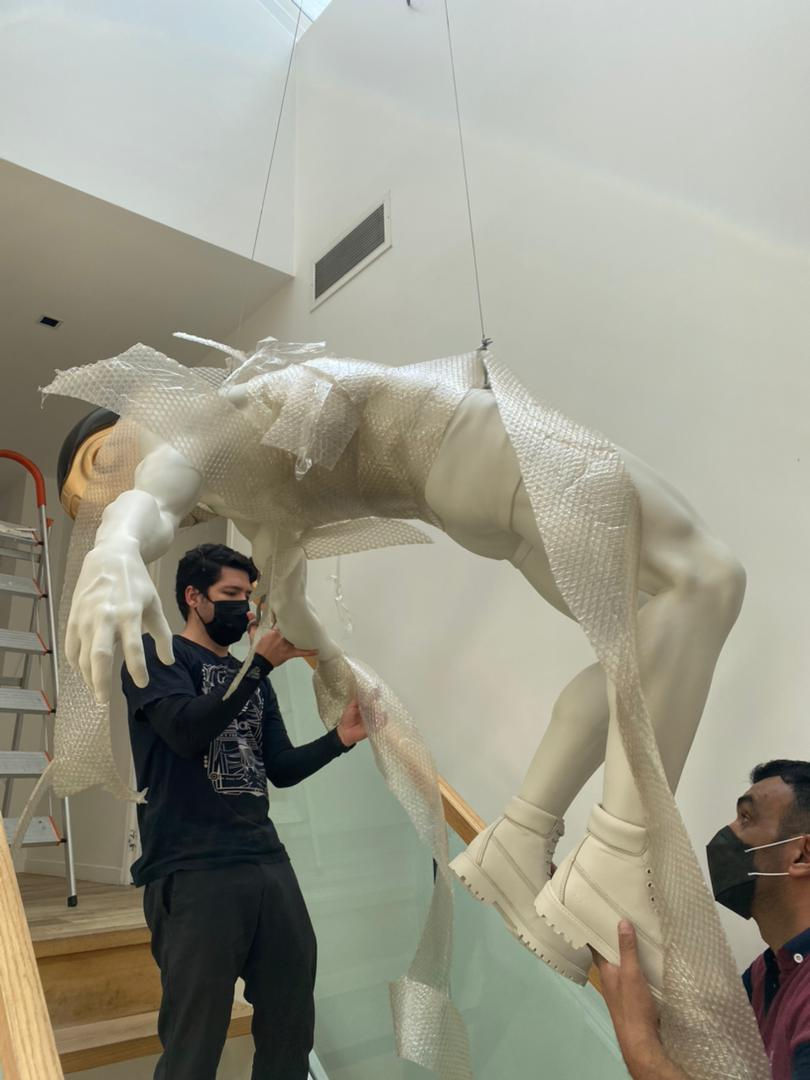
Scale, Architecture, and the Space Around a Sculpture
One of the most important things to consider when commissioning a sculpture is where it will live.
A small piece displayed on a pedestal, an architectural wall relief, and a large sculpture in a building lobby all come with different design considerations.
When an artwork is created for a particular location, the surrounding architecture can become part of the design process itself.
For example, with a wall relief, the dimensions of the wall, viewing distance, lighting, and depth of the sculpted forms can all affect the result.
For a freestanding sculpture, it’s important to think about viewing angles, the surrounding space, and how people will move around the piece.
I don’t think an artwork needs to be large or highly detailed to make an impact.
Sometimes a simple form with the right composition can have a much stronger presence than something far more elaborate.
This is especially relevant when commissioning artwork for luxury spaces, private residences, or architectural projects, where the artwork needs to feel connected to its surroundings.
For interior designers and architects looking for statement artwork, a custom sculpture or bespoke site-specific installation can become an integral part of the space rather than something added at the end.
How Much Does It Cost to Commission a Sculpture?
One of the first questions people ask when considering a sculpture commission is how much it will cost.
The answer is that it really depends on the project.
There isn’t a single price that applies to every original sculpture.
Several factors affect the overall cost:
Size and complexity: A small, relatively simple sculpture will have different requirements from a large, highly detailed piece.
Design and sculpting: The time spent developing the concept, sculpting, making revisions, and preparing the artwork for production.
Materials and fabrication: Bronze, resin, and other materials involve different production methods and costs.
Finishing, transportation, and installation: These can become especially important for larger works or projects that require structural support or professional installation.
Editions and exclusivity: Whether the artwork is a one-of-a-kind piece or part of a limited edition can also influence the price.
To get an initial estimate, it helps to share as much information as possible about the idea, approximate dimensions, intended location, preferred materials, and available budget.
Not every detail needs to be decided from the beginning. Sometimes an initial conversation can reveal different ways to approach the project while staying within a realistic budget.
It’s also a good idea to agree on revisions, payment stages, delivery timelines, and any reproduction or ownership rights before the work begins.

How Long Does a Custom Sculpture Take to Make?
The timeline for a custom sculpture depends on its size, complexity, and fabrication method.
Some projects may be completed in a matter of weeks, while larger or more complicated works can take several months.
The process typically includes initial design, sculpting, design approval, physical fabrication, and finishing.
Projects involving mold making, casting, structural work, or specialized installation may require additional time.
I think it’s always better to discuss a realistic timeline from the beginning. It helps the client plan ahead and gives the artist enough time to develop and complete the work properly.
Starting a Sculpture Commission
If you’re thinking about commissioning a sculpture, you don’t need to have a fully developed design before reaching out.
Sometimes a reference image, a character, a story, or even a simple idea is enough to start a conversation.
You might know exactly what you want, or you might simply have a space where you’d love to see a unique piece of art.
Either way, an initial conversation can help clarify the idea, explore design possibilities, and figure out what’s practical.
Through Art of Arm, a Toronto-based fine art studio, I explore sculpture as a way to bring ideas, characters, and imagined worlds into physical form.
If you have an idea for an original sculpture, I’d be happy to hear about it and explore what we might create together.
Armin Hesampour
Artist & Designer | Art of Arm
Toronto, Ontario


Comments